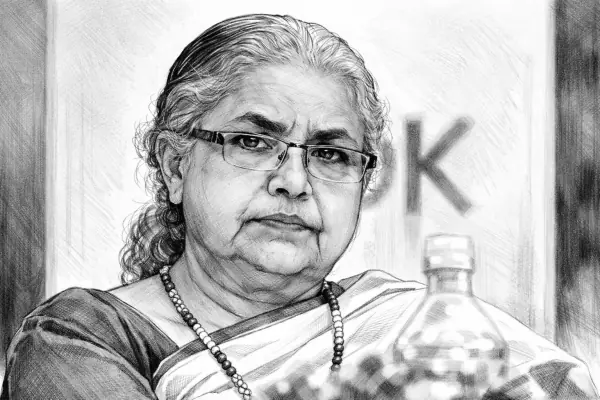
Sushila Karki
Former Interim Prime Minister & Chief Justice of Nepal
1952 – present
Nepal's First Female Head of Government
Sushila Karki made history as Nepal's first female Prime Minister, serving as interim head of government from September 2025 to March 2026. Her appointment came at one of the most turbulent moments in Nepal's recent political history, and her steady leadership through the crisis earned her widespread respect across political lines.
The Gen-Z Uprising
In September 2025, Nepal was swept by massive anti-corruption protests led predominantly by Generation Z students and young citizens. Frustrated by rampant corruption, the ostentatious display of wealth by political elites, and allegations of misuse of public funds, hundreds of thousands of young Nepalis took to the streets. The movement — organized significantly through Discord, where a server dubbed "the Parliament of Nepal" grew to over 145,000 members — demanded the resignation of Prime Minister KP Sharma Oli.
The protests succeeded. Oli resigned, and the nation turned to Sushila Karki, the former Chief Justice, as the consensus choice for interim leader — a decision that emerged organically from the protest movement itself.
A Distinguished Judicial Career
Before her appointment as interim PM, Karki had built a distinguished career in Nepal's judiciary spanning decades. She rose through the ranks to become the Chief Justice of Nepal's Supreme Court — the first woman to hold that position. Her reputation for judicial independence and legal acumen made her a natural choice to lead a transitional government focused on restoring public trust.
Steering Nepal Through Crisis
Karki was sworn in on September 12, 2025, and immediately set a clear agenda: restore peace, establish good governance, fight corruption, and organize free and fair elections within six months. Among her first acts, she repealed controversial amendments to the Cybersecurity Act that had been used to crack down on protesters and ordered the release of detained demonstrators.
She appointed a technocratic interim cabinet and focused on creating the conditions for credible elections — earning trust from citizens who had lost faith in the political establishment.
The March 2026 Elections
Karki fulfilled her mandate. On March 5, 2026, Nepal held general elections — the first post-protest election in the country's history. The elections were widely praised as free and fair, resulting in a landslide victory for the Rastriya Swatantra Party led by Balen Shah, who secured a parliamentary majority for the first time since 1999.
Karki's role in guiding Nepal from crisis to democratic renewal cemented her place in history. As The Statesman noted, regardless of election outcomes, Sushila Karki had already "won the biggest political battle" by successfully stewarding the nation through its Gen-Z uprising.
Connection to Eastern Nepal
Karki's roots in eastern Nepal connect her to the rich political tradition of Biratnagar and the broader Koshi region. Her rise to national leadership continued a remarkable pattern — the emergence of transformational leaders from this region at pivotal moments in Nepal's history. From B.P. Koirala's fight for democracy in the 1950s to Karki's stewardship of a Gen-Z revolution seven decades later, Biratnagar's region has consistently produced leaders who shaped the nation's destiny.