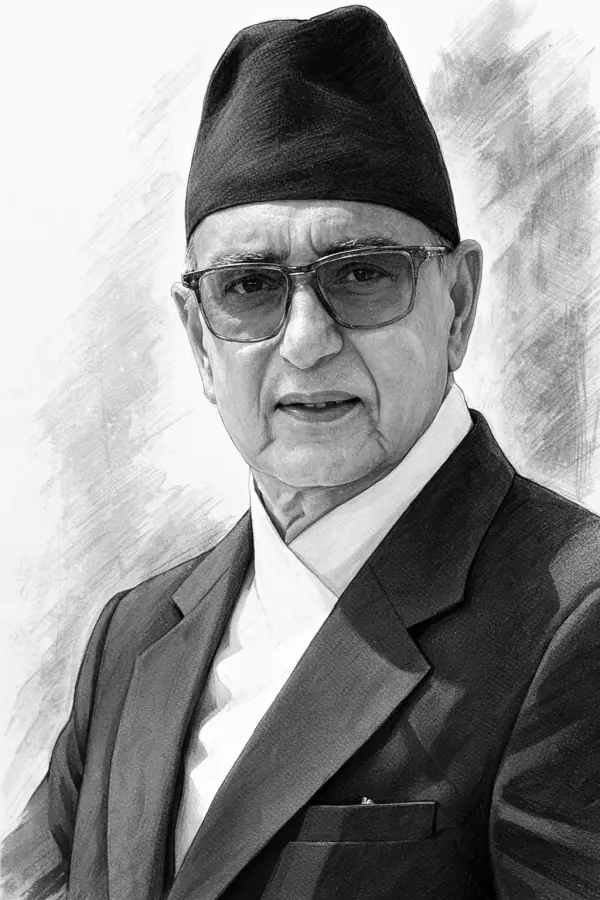
Girija Prasad Koirala
Four-time Prime Minister of Nepal
1925 – 2010
A Life Dedicated to Democracy
Girija Prasad Koirala, the youngest of the politically prominent Koirala brothers, was born on June 4, 1925, in Biratnagar. His political journey began in the very factories and streets of this city, and he would go on to become one of the most consequential leaders in Nepali history.
From the Jute Mill to National Politics
Girija Prasad's political career was forged in the Biratnagar Jute Mill, where he worked as a labor organizer. He was instrumental in the 1947 jute mill strike and subsequent democratic movements. His understanding of working-class struggles gave him a grassroots connection that defined his political style.
Four Times Prime Minister
Girija Prasad Koirala served as Prime Minister of Nepal four times (1991–1994, 1998–1999, 2000–2001, and 2006–2008), navigating some of the most turbulent periods in Nepali politics. He played a pivotal role in the 1990 People's Movement that restored multiparty democracy, and again in the 2006 movement that ended the king's direct rule.
Architect of the Republic
Perhaps his greatest contribution was his role in Nepal's transition from a monarchy to a federal democratic republic. As Prime Minister during the critical 2006–2008 period, he oversaw the Comprehensive Peace Agreement with the Maoists, the abolition of the monarchy, and the election of the Constituent Assembly. He served as the last Prime Minister of the Kingdom of Nepal and the first of the Federal Democratic Republic.
Connection to Biratnagar
Girija Prasad Koirala's story is inseparable from Biratnagar. The city shaped his worldview, gave him his first political experiences, and remained close to his heart throughout his life. He passed away on March 20, 2010, leaving behind a legacy of relentless commitment to democracy.