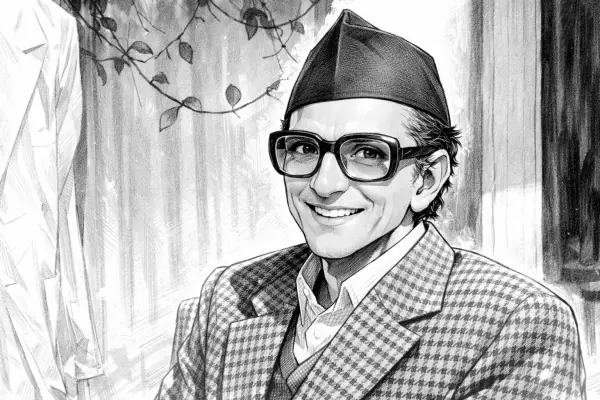
Bishweshwar Prasad Koirala
First Democratically Elected Prime Minister of Nepal
1914 – 1982
The Father of Nepali Democracy
Bishweshwar Prasad Koirala, universally known as B.P. Koirala, was born on September 8, 1914, in Biratnagar. He was not just a politician — he was a novelist, a thinker, and the architect of Nepal's democratic aspirations.
Early Life and Political Awakening
Born into a politically active family in Biratnagar, B.P. was deeply influenced by the independence movements sweeping South Asia. He studied in India, where he was exposed to the ideas of democratic socialism and the Indian independence movement. These experiences shaped his vision for a democratic Nepal free from Rana autocracy.
The Biratnagar Struggle
B.P. Koirala was one of the key organizers of the historic 1947 Biratnagar Jute Mill strike — a landmark event that ignited Nepal's democratic movement. From his base in Biratnagar, he built the Nepali Congress party into a formidable force for change.
Prime Minister
In 1959, B.P. Koirala led the Nepali Congress to a landslide victory in Nepal's first general election, becoming the country's first democratically elected Prime Minister. His government initiated land reforms, modernization programs, and diplomatic outreach. However, his tenure was cut short when King Mahendra dissolved parliament and imprisoned him in December 1960.
Legacy
Despite years of imprisonment and exile, B.P. Koirala never abandoned his commitment to democracy. He returned to Nepal in 1976, advocating for national reconciliation. He passed away on July 21, 1982, but his vision of a democratic Nepal eventually triumphed. Today, he is revered as the father of Nepali democracy, and his roots in Biratnagar remain a source of immense pride for the city.